Roofers around Denton do not guess about the weather, they look it up. The federal storm database keeps a running county record, and the recent numbers explain a lot about how roofs live and die here: 33 separate hail days across Denton County in four years, 168 logged hail reports, 139 of them an inch or bigger. That is not a scary brochure statistic. It is the actual operating environment your shingles work in, and it rewards homeowners who read it the way the trade does.
What the NOAA record actually says
The Storm Events Database run by NOAA logs every reported hail strike and damaging wind gust by county, with dates, sizes, and locations. For Denton County, the 2023 through 2026 window shows hail on 33 different days, stones up to 5.90 inches around Sanger in June 2023, baseball-class hail near Bartonville and Justin in 2023 and 2024, and straight-line winds that peaked at 96 mph in the May 2024 storms.
Two honest cautions before anyone panics. The data is county-level, so it cannot tell you what landed on your specific street. And the database publishes a few months behind, so the most recent season is always undercounted. Read it as a climate portrait, not a forecast: this county produces roof-testing weather nearly every year.
Why hail damage stays invisible for a year
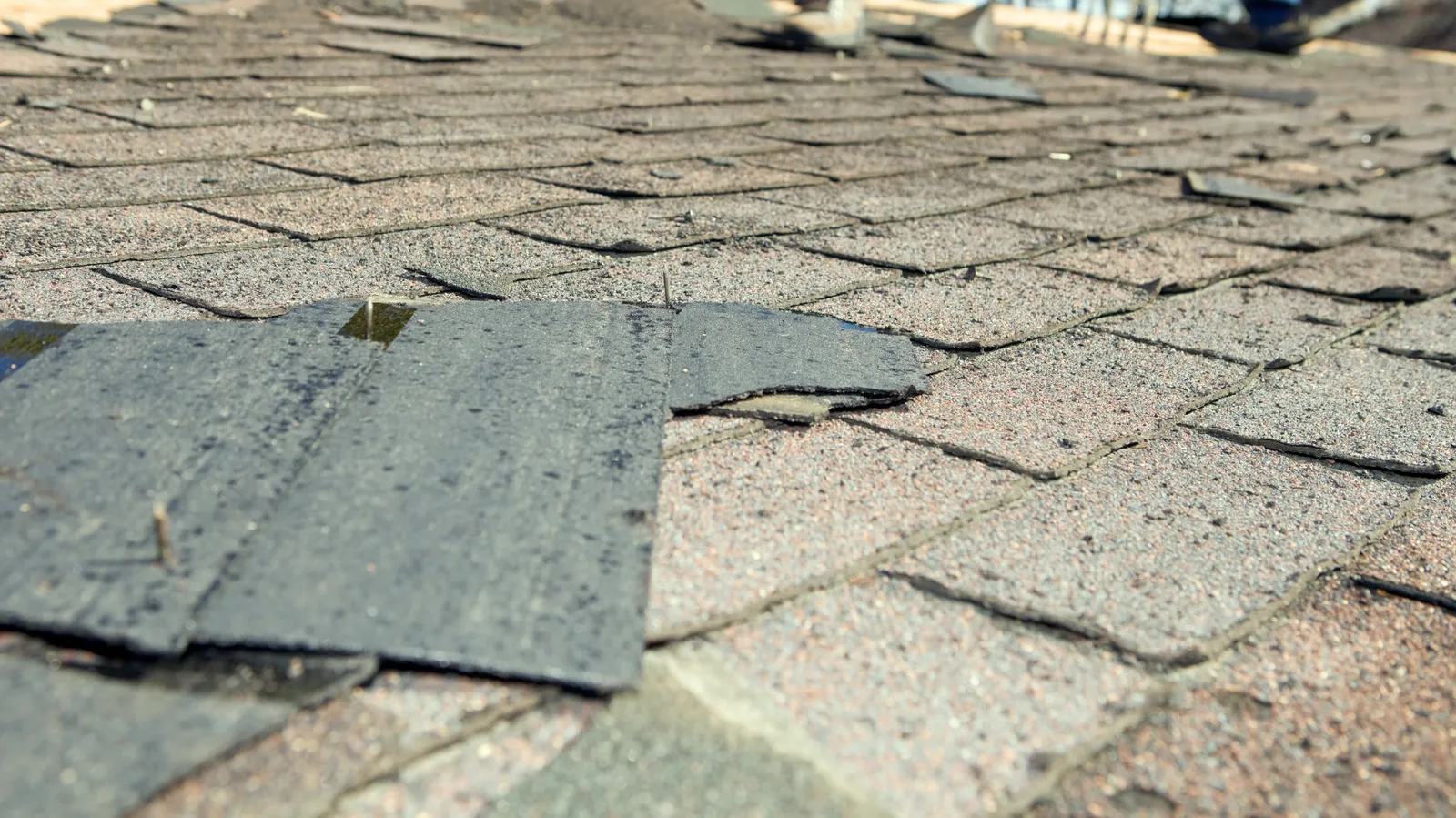
A one-inch stone almost never punches a hole. It crushes the granule coat into the asphalt mat, leaving a soft bruise that looks like nothing from the yard. Sun and rain then work that weakened spot for a season or two until it opens, at which point the leak appears to come from nowhere and the storm that caused it is old news.
That delay is the whole reason documentation matters. A roof checked and photographed within weeks of a hail day has a dated record connecting the damage to the storm. A roof checked two years later has an argument.
The dates worth checking a roof against
If your roof went unchecked through the recent record, a few county entries are worth knowing: June 11 and 15, 2023, when the biggest stones of the window fell across the county's north and southwest; March 14 and April 1, 2024, when baseball-class hail returned; and May 28, 2024, when the 96 mph gust was clocked. September 2025 added a run of 60 to 85 mph wind days directly over Denton itself.
None of this means your roof took damage on those dates. It means those are the dates an insurer, an inspector, or a buyer's option-period roofer will be thinking about when your roof's condition comes up.
What a documented storm check adds
A proper check after a hail day walks every plane and photographs what it finds: bruises, creased shingles, broken seal strips, dented vents and soft metal. Dated photos turn a vague worry into evidence, and evidence is what a claim, a sale, or even a decision to do nothing should rest on.
The check is free around here, and the verdict is honest in both directions. Plenty of roofs come through clean, and knowing that, on paper, is worth as much as finding damage early.
Building the next roof against the record
When a Denton roof does come due, the county record argues hard for impact-rated shingles. Class 4 systems are tested against exactly the stone sizes this county logs, and a good share of Texas carriers price that in. The math on that upgrade, and the honest comparison against standard architectural shingles, is a conversation worth having before the next entry lands in the database.
Wondering what the recent seasons did to your own roof? Reach out and a local roofer will walk it, photograph it, and give you the plain verdict, free.